
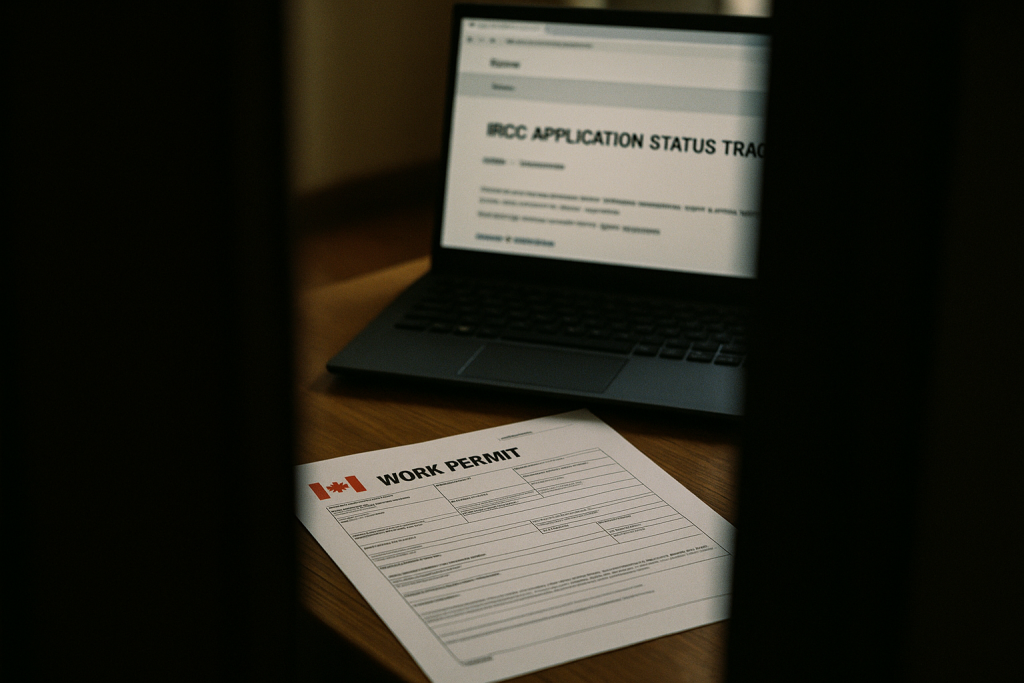
The recent relaunch of the Application Status Tracker by IRCC is a significant development for Canadian employers hiring internationally trained workers. Understanding work permit employer requirements is essential for ensuring a smooth hiring process and compliance with federal regulations.
The Importance of Compliance with Work Permit Requirements
Compliance with work permit requirements is crucial for employers to avoid penalties and ensure a smooth hiring process. Employers must meet specific criteria outlined by Immigration, Refugees and Citizenship Canada (IRCC) and Employment and Social Development Canada (ESDC) to hire foreign workers legally.
Employers must ensure that the job offer matches the worker’s qualifications and that the employment conditions meet Canadian standards. Compliance also includes understanding the distinctions between the Temporary Foreign Worker Program (TFWP) and the International Mobility Program (IMP).
Navigating the Application Status Tracker
The IRCC’s Application Status Tracker provides employers with greater transparency regarding the status of their workers’ applications. This tool is particularly useful for work permits, study permits, visitor visas, and certain permanent residence applications. Employers can now better manage timelines and communicate effectively with their prospective employees.
To utilize this tool, employers should ensure that they have all necessary application details at hand, as accuracy in tracking is crucial for maintaining compliance and avoiding delays.
Understanding LMIA and LMIA-Exempt Routes
Employers must determine whether they require a Labour Market Impact Assessment (LMIA) before hiring a foreign worker. The TFWP requires an LMIA, while the IMP does not. This distinction is significant, as it affects the application process and employer obligations.
Employers can check if an LMIA is necessary using the IRCC’s tool. Not all positions require an LMIA, such as those covered under the Global Skills Strategy or Francophone Mobility, but employers must confirm eligibility.
Steps to Ensure Compliance in Hiring
- Check if an LMIA is required using IRCC’s tool and understand the application process.
- Ensure the job offer meets the standards of the prevailing wage in Canada.
- Keep detailed records of the employment offer and maintain accuracy for six years.
- Provide workers with a workplace free of abuse and inform them of their rights.
- Stay informed of changes in immigration policies and regulations.
By following these steps, employers can reduce the risk of non-compliance and streamline their hiring processes.
Evaluating the Prevailing Wage
One of the critical requirements in hiring internationally trained workers is offering a wage that meets the prevailing wage rate. This is distinct from the median hourly wage used to determine high-wage or low-wage streams for LMIA applications.
Employers must verify the prevailing wage for their specific occupation and region. The wage offered should not only meet the stream threshold but also align with the prevailing wage rate for that occupation. Check the table provided by ESDC to ensure compliance.
Ensuring a Smooth Transition for New Hires
Successfully integrating internationally trained workers into the workplace requires careful planning and support. Employers should develop a comprehensive onboarding process that includes cultural orientation and training to help new hires adapt to the Canadian work environment.
Providing resources and support for language development and professional growth can greatly enhance retention and job satisfaction for new employees. Employers can also benefit from partnerships with settlement agencies to facilitate this process.
Consequences of Non-Compliance
Failure to meet work permit employer requirements can lead to severe consequences, including financial penalties, suspension or revocation of permits, and a ban from hiring through both the TFWP and IMP. Employers should familiarize themselves with the compliance regulations and maintain records to avoid these issues.
Employers found non-compliant are listed publicly, which can damage their reputation and hinder future hiring efforts. It is vital to stay informed and proactive in meeting all regulatory requirements.
Using Resources for Employer Success
Employers can find useful resources and guides to help navigate the complexities of hiring internationally trained workers. Articles like Leveraging the Provincial Nominee Program for Employer Success and Streamlining LMIA Applications provide valuable insights into specific areas of the hiring process.
By leveraging these resources, employers can enhance their understanding of work permit employer requirements and improve their hiring strategies.
In conclusion, staying informed about work permit employer requirements is essential for Canadian employers hiring internationally trained workers. By understanding compliance obligations and utilizing available resources, employers can avoid pitfalls and ensure a successful hiring process. For those looking to hire newcomers, consider posting your job on Newcomers Jobs to access a diverse pool of talent.
Source: CIC News.